
Oestrogen is the main hormone used in HRT to treat menopausal symptoms, but progesterone and progestogens have an important role for most women.
Many women will be familiar with micronised progesterone, although there are several other options available, each with slightly different properties.
Two options being increasingly considered in menopause care are Slynd (drospirenone) and Nalvee (dydrogesterone). Both contain synthetic progestogens, but they have different properties, uses and licensing arrangements.
So, what are Slynd and Nalvee, how do they work, and what might make them useful options to consider?
Why do we need progesterone or a progestogen in HRT?
Oestrogen is often the hormone responsible for improving menopausal symptoms such as hot flushes, night sweats, brain fog and joint pain.
However, oestrogen also stimulates the lining of the womb (the endometrium). If you have a womb and take systemic oestrogen (such as patches, gels, sprays or tablets), you generally also need progesterone or a progestogen to protect the womb lining from becoming too thick, which can increase the risk of endometrial cancer.
This isn't needed with vaginal oestrogen alone.
What's the difference between body-identical progesterone and synthetic progestogens?
You may have heard the term body-identical progesterone.
In the UK this term refers to progesterone that has the same molecular structure as the progesterone naturally produced by your ovaries. The most familiar example is micronised progesterone, commonly prescribed as Utrogestan or Gepretix.
Many women tolerate micronised progesterone very well, and it is often a first choice when prescribing HRT. It can also help some women with sleep.
Synthetic progestogens, on the other hand, are medications designed to act on progesterone receptors but have a different molecular structure from natural progesterone.
There are several different types, and they don't all behave in the same way. Some have additional hormonal effects, while others act more selectively on progesterone receptors.
Neither body-identical progesterone nor synthetic progestogens are automatically right or wrong for everyone. The important thing is finding a preparation that provides effective protection of the womb lining and is suitable for the individual woman.

Slynd: a different type of progestogen
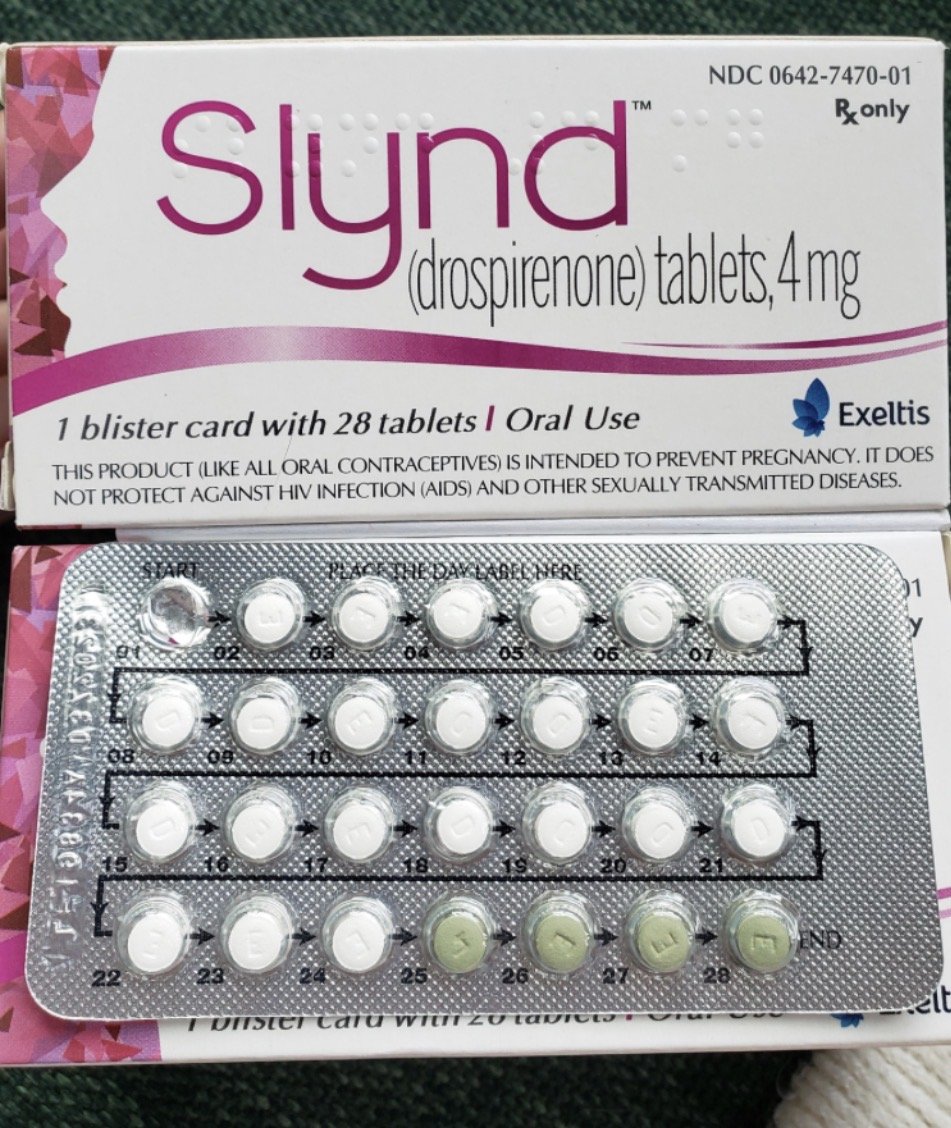
Slynd is a progestogen-only contraceptive pill containing 4 mg of drospirenone.
Drospirenone is a synthetic progestogen with some interesting properties. It has anti-androgenic activity, meaning it can reduce some of the effects of testosterone, such as oily skin and acne.
It also has mild anti-mineralocorticoid activity, which means it can influence how the body regulates salt and water. This may help with fluid retention and bloating in some women.
Unlike some other progestogen-only contraceptive pills, Slynd works primarily by suppressing ovulation.
This can be particularly relevant during perimenopause, when fluctuating ovarian hormones may contribute to cyclical symptoms.
In our clinical experience, we have found Slynd can be particularly helpful for some women who have struggled with other progesterone or progestogen preparations, including those experiencing progesterone intolerance. We have also seen benefits in some women with premenstrual dysphoric disorder (PMDD), where suppressing ovulation may help reduce cyclical symptoms. However, research specifically examining Slynd for these indications remains limited, and it won't suit everyone.
Can Slynd be used as part of HRT?
Yes. Although Slynd is licensed in the UK as a contraceptive pill rather than as part of HRT, the British Menopause Society (BMS) recognises that it can also be prescribed alongside oestrogen to provide endometrial protection.
This is known as off-label prescribing, meaning that a medication is being used outside the specific terms of its product licence.
The BMS provides guidance on this use, based on existing research into drospirenone. However, studies specifically examining Slynd 4 mg alongside different doses of HRT oestrogen remain limited, particularly at higher oestrogen doses.
How is Slynd taken?
A standard Slynd packet contains 28 tablets:
24 white tablets, each containing 4 mg of active drospirenone.
4 green tablets, which are inactive and contain no drospirenone.
When used for contraception, all 28 tablets are taken in sequence.
However, when prescribed as part of HRT, the BMS recommends taking one active white tablet every day, skipping the four green tablets and starting a new packet immediately.
As this is an off-label use, treatment should always be discussed and tailored to your individual needs, following the instructions given by your prescribing clinician.
Are there any risks or side effects?
Like all hormonal medications, Slynd can cause side effects, including changes in bleeding patterns, headaches, breast tenderness and mood symptoms.
Research suggests that progestogen-only contraceptive pills may be associated with a small increased risk of breast cancer. However, evidence specifically examining Slynd alongside oestrogen as part of HRT is limited, so its individual risk in this setting remains uncertain.
Drospirenone does not contain oestrogen, and progestogen-only contraception is generally not associated with the increased blood clot risk seen with combined hormonal contraception. However, individual medical history and other risk factors still need to be considered.
Because drospirenone can affect how the body regulates salt and water, it can increase potassium levels in certain circumstances. Kidney function, certain medical conditions and medications that affect potassium may therefore need consideration before prescribing.
Nalvee: another option for HRT
Nalvee contains 10 mg of dydrogesterone, a synthetic progestogen that has been used in HRT for many years.
Although Nalvee is a relatively new addition to the UK HRT options, dydrogesterone itself has been used for decades.
It was previously available as a standalone tablet called Duphaston, until 2008, and is also found in established HRT preparations such as Femoston.
So, while Nalvee may be a new name to many women, the hormone it contains is certainly not new.
What makes Nalvee particularly useful is that dydrogesterone is now available again as a separate tablet. This means it can be prescribed alongside an individualised oestrogen preparation, including oestrogen patches, gels or sprays.
Dydrogesterone has a relatively selective action on progesterone receptors, without significant androgenic activity.
It is generally well tolerated, although, as with any progestogen, individual responses vary. Some women who have experienced unwanted side effects with other progesterone preparations may find dydrogesterone more comfortable to take.
How is Nalvee taken?
Nalvee is licensed for use alongside oestrogen as part of HRT, including sequential regimens where it is taken for part of each month.
A commonly prescribed sequential regimen involves taking 10 mg daily for the final 14 days of a 28-day cycle, although the appropriate dose and duration depend on the individual treatment plan.
The British Menopause Society also includes dydrogesterone as an option for continuous use, with 10 mg daily listed in its prescribing guidance.
Continuous daily use of Nalvee for HRT is off-label, but is recognised within BMS guidance.
The most appropriate regimen depends on several factors, including whether you are perimenopausal or postmenopausal, your oestrogen dose and your bleeding history.
It is important to remember that Nalvee is not a contraceptive, so women who still require contraception will need to consider this separately.
Can Nalvee help with bleeding problems on HRT?
Nalvee can be a useful option for women experiencing troublesome or irregular bleeding on HRT.
Dydrogesterone provides protection of the womb lining when prescribed at an appropriate dose and may help achieve a more predictable bleeding pattern.
However, bleeding patterns vary between women, and persistent, heavy or unexpected bleeding should always be assessed to ensure there is no underlying cause rather than simply changing medication.
What about side effects and risks?
Nalvee is generally well tolerated, although some women may experience headaches, breast tenderness, nausea, changes in bleeding or mood symptoms.
One important consideration with HRT is breast cancer risk. Observational research, including the French E3N study, suggests that HRT containing dydrogesterone may be associated with a lower breast cancer risk than HRT containing some other synthetic progestogens.
Although these findings are encouraging, they do not mean that dydrogesterone is risk-free, and the risks of combined HRT still need to be considered.
There is also limited research specifically examining blood clot risk when standalone Nalvee is combined with different oestrogen preparations. The route of oestrogen administration is particularly important, with transdermal oestrogen generally associated with a lower blood clot risk than oral oestrogen.
More choice when it comes to HRT
Slynd and Nalvee are two additional options that may be considered alongside more established treatments. They have different properties, licensing arrangements and evidence bases, so neither will be suitable for everyone.
If you're already feeling well on your current HRT, there's no need to change simply because other options are available.
The aim is always to find a safe, effective treatment that provides appropriate protection of the womb lining while supporting your overall health and wellbeing.
If you're struggling to find an HRT regimen that suits you, particularly if you've experienced side effects or difficulties tolerating progesterone, we can help you explore the options available.
At Lemala Health, we offer personalised menopause consultations, with time to discuss your symptoms, medical history and treatment options.
References:
British Menopause Society – HRT: Practical Prescribing (August 2026)
Evidence-based guidance for healthcare professionals on prescribing HRT, including different progesterone and progestogen options.
Article written by Dr Emma Ginns and Dr Mari Walling, British Menopause Society Registered Specialist GPs, Co-founders of Lemala Health, October 2026
This information is not a substitute for professional medical advice, diagnosis, or treatment. Always consult your healthcare provider for personalised guidance.