
Why are my periods so heavy? Causes and what helps in perimenopause.
“I thought this was just part of getting older.”
We hear this often.
Many women are living with heavy periods without realising they are outside the normal range. Over time, it can become something you simply adapt to.
But heavy bleeding is not something you have to put up with.
What counts as a heavy period?
You may be experiencing heavy periods if you:
Need to change pads or tampons every one to two hours
Need double protection, such as a tampon and pad
Pass large clots (bigger than 10p coin)
Bleed for longer than seven days
Soak through clothing or bedding
Feel very tired, dizzy or short of breath
Avoid normal things, like exercise, or take time off work because of your periods
Why do periods become heavy in perimenopause?
Heavy bleeding can occur at any age but is more common during perimenopause when cycles become irregular. Hormone fluctuations at this stage can cause the womb lining to build up more than usual, making periods heavier and less predictable.
Are there other causes of heavy periods?
Heavy bleeding may also be linked to conditions such as fibroids, endometriosis or thyroid problems. Often no specific cause is found.
What treatments are available?
Heavy periods are common, but they don’t need to be tolerated. There are effective treatment options available.
One of the most helpful options is the hormonal coil (IUS).
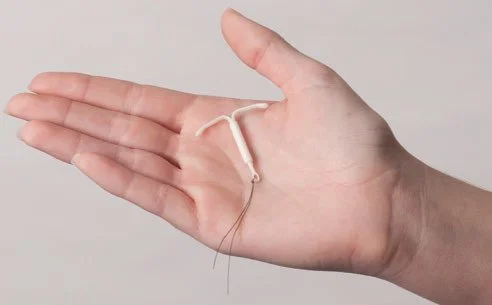
The Hormonal Coil (IUS)
The IUS is a small T-shaped device placed in the womb.
It releases a hormone called levonorgestrel, which thins the womb lining. This can make periods lighter, shorter or stop them all together.
It can also provide protection for the womb lining if you are taking oestrogen HRT. You can read our full guide to hormonal coils.
Why the IUS can be particularly helpful in perimenopause
Reduces heavy or unpredictable bleeding
Can stop periods altogether
Provides long-term contraception and HRT protection
Requires less frequent hormone exposure than daily tablet
Things to consider
Insertion of the IUS may be uncomfortable for some, but you can ask for pain relief during the procedure.
Irregular bleeding or spotting can occur in the first few months. Risks such as infection or expulsion are rare but important to be aware of.
Final thoughts
Heavy periods can develop gradually, and many women delay seeking help. A range of simple and effective treatments is available, including medicines, hormonal options, and sometimes procedures.
Hormone replacement therapy itself can also help reduce heavy bleeding. The hormonal coil is one of the most versatile options, particularly during perimenopause.
The key is finding the right approach for you.
How we can support you
At Lemala Health, we offer personalised menopause care with time to explore your symptoms properly. If you would like support, you can explore appointments here
Drs Emma & Mari.
Lemala Health
The information shared in this blog is for general educational purposes only and is not intended as individual medical advice. If you have concerns about your symptoms or treatment, please seek advice from your own GP or a qualified healthcare professional.
Written by Dr Mari Walling, British Menopause Society Registered Specialist, GP and Accredited Lifestyle Medicine Physician. Co-founder, Lemala Health. January 2026